Made to order
Shoes cut from one belly
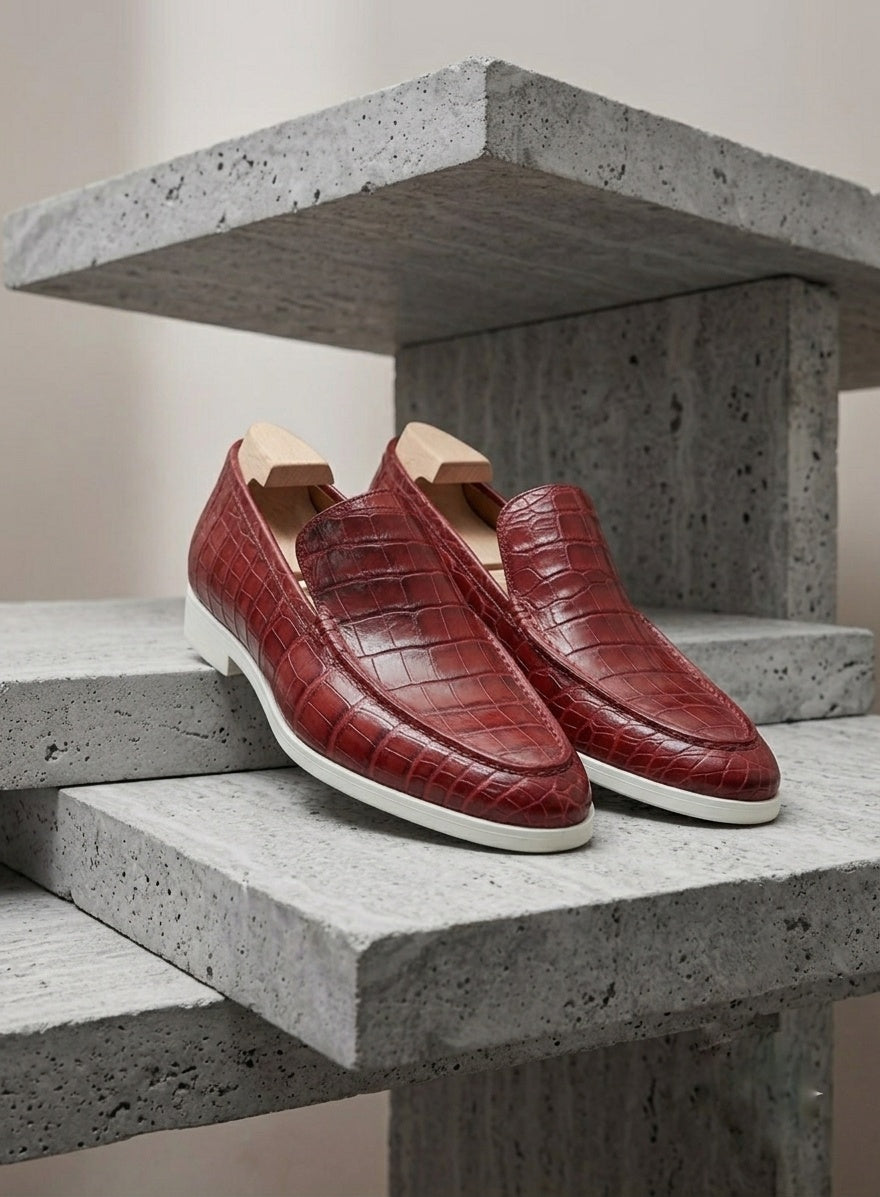
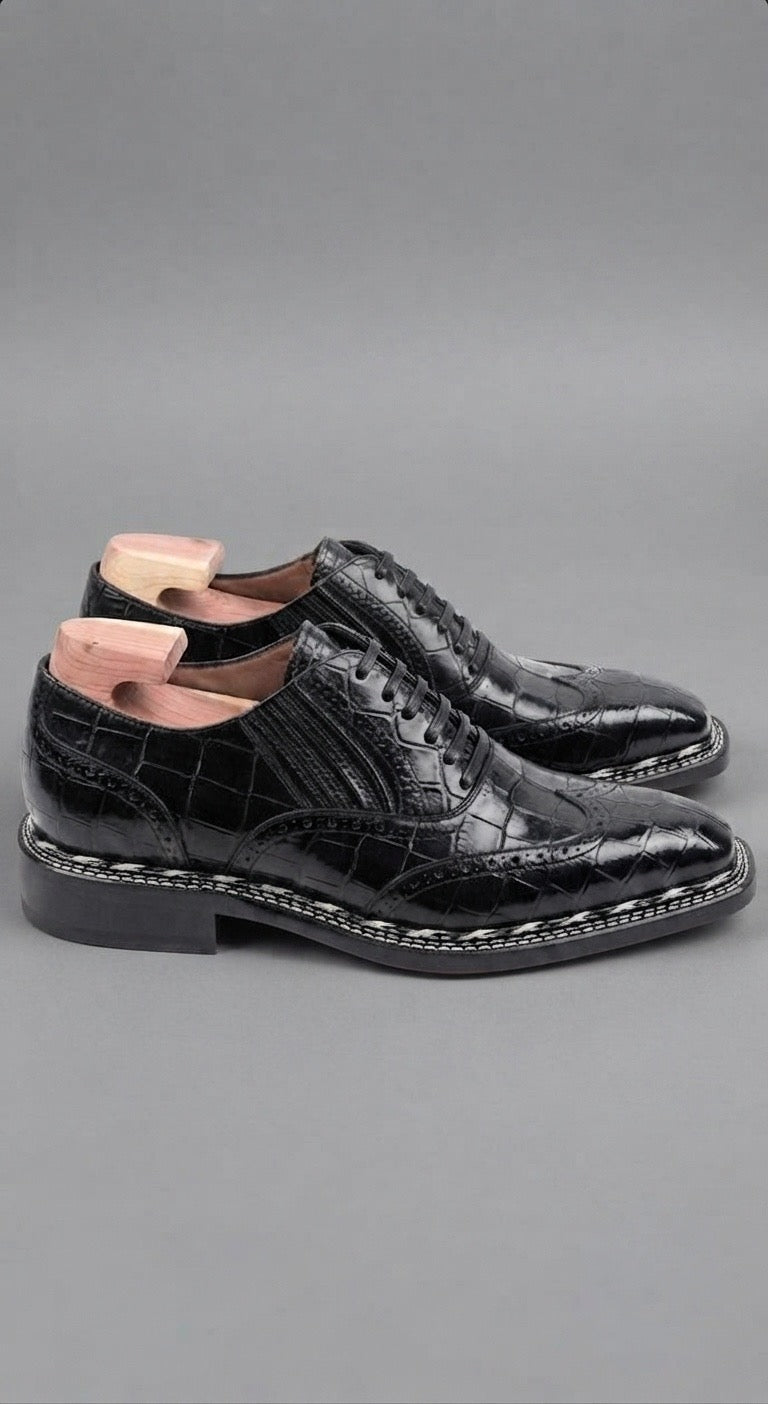
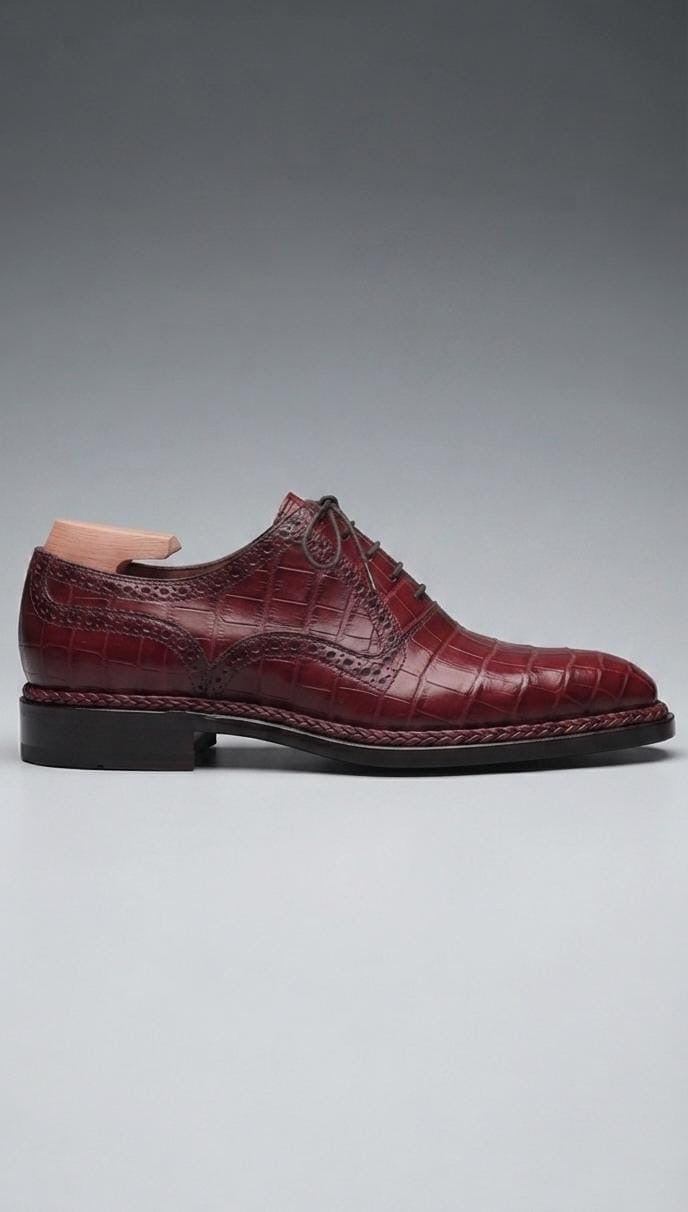
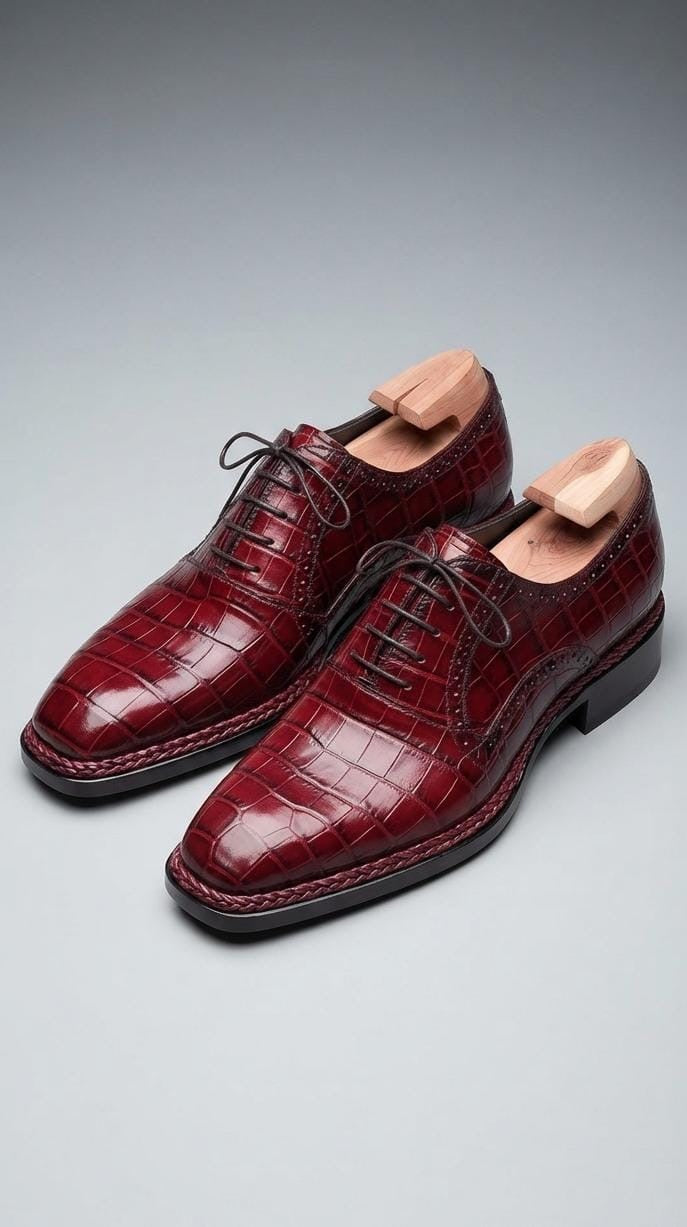
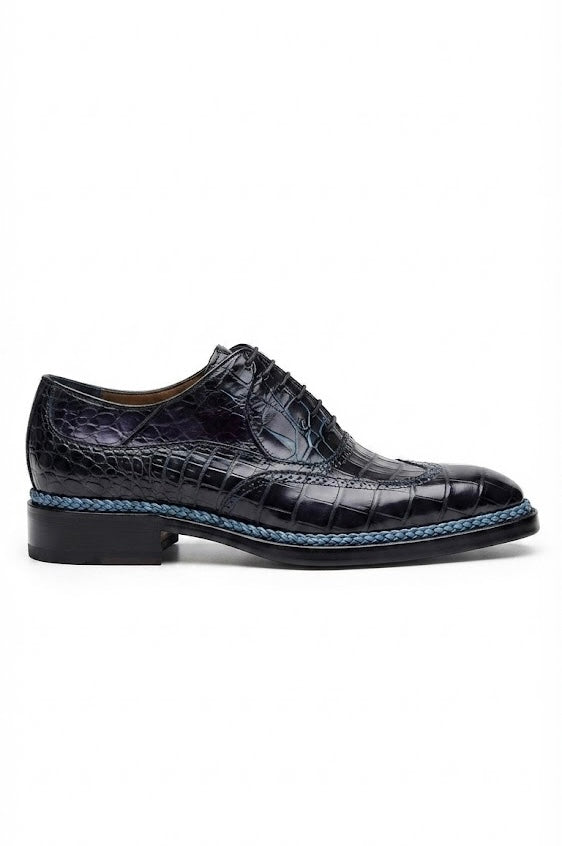
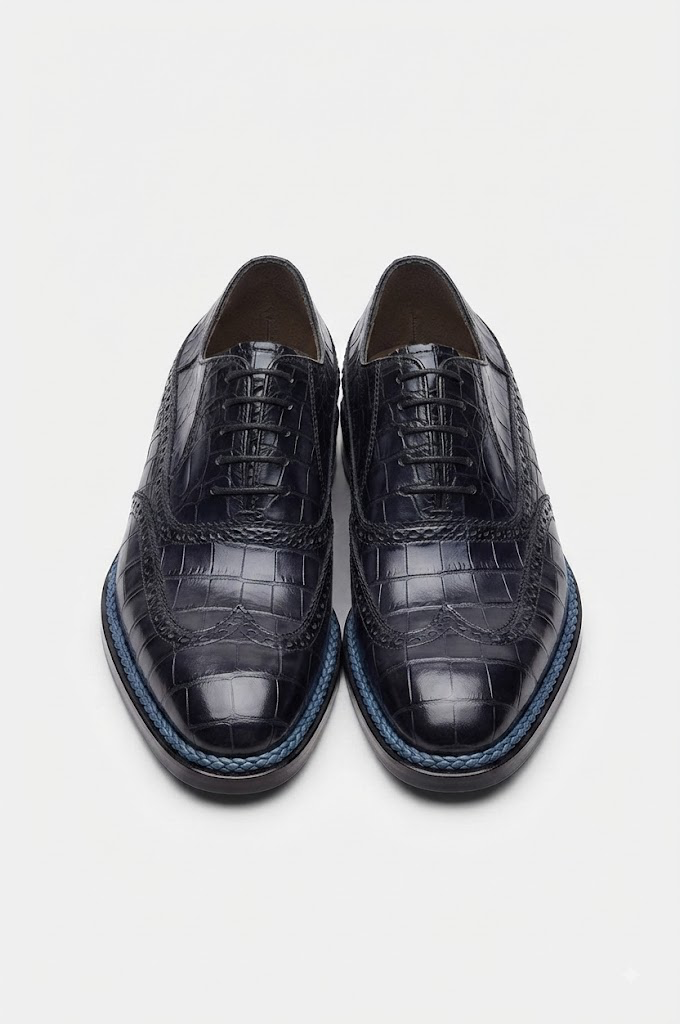
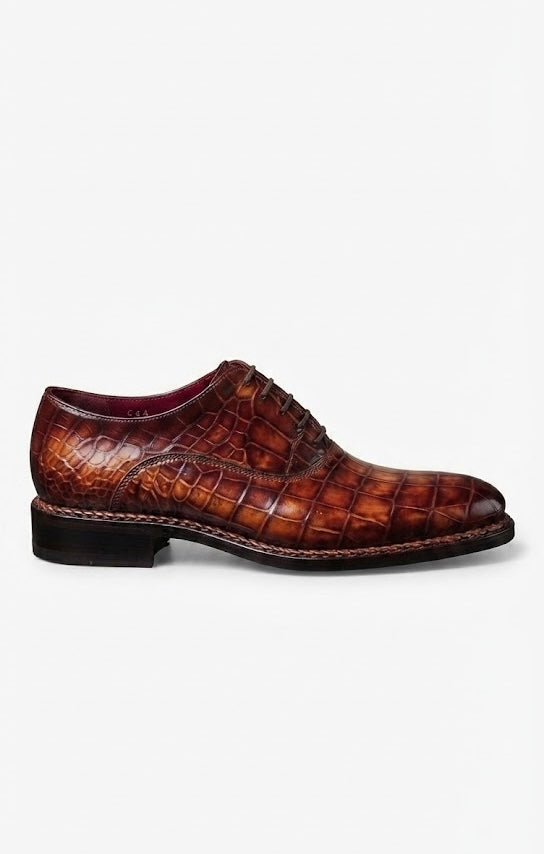
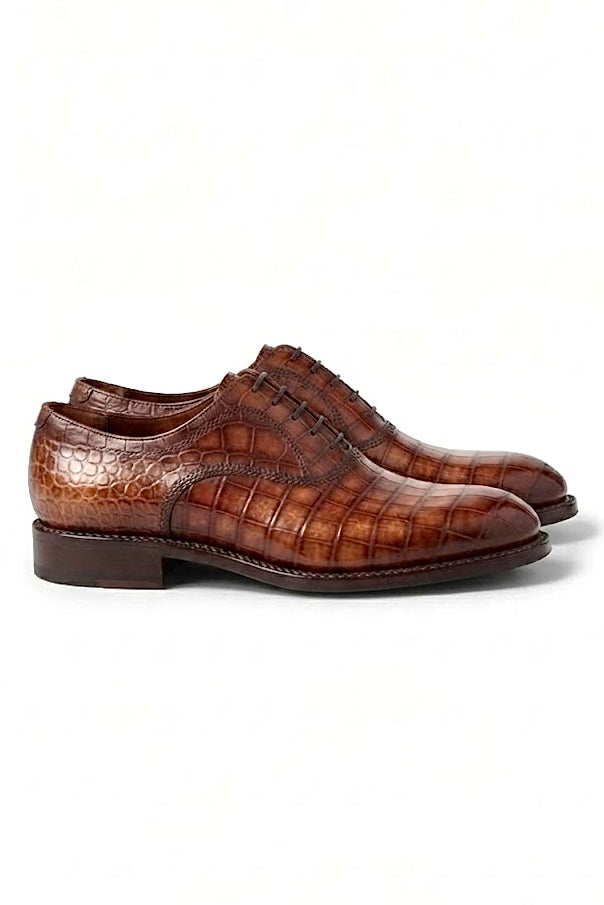
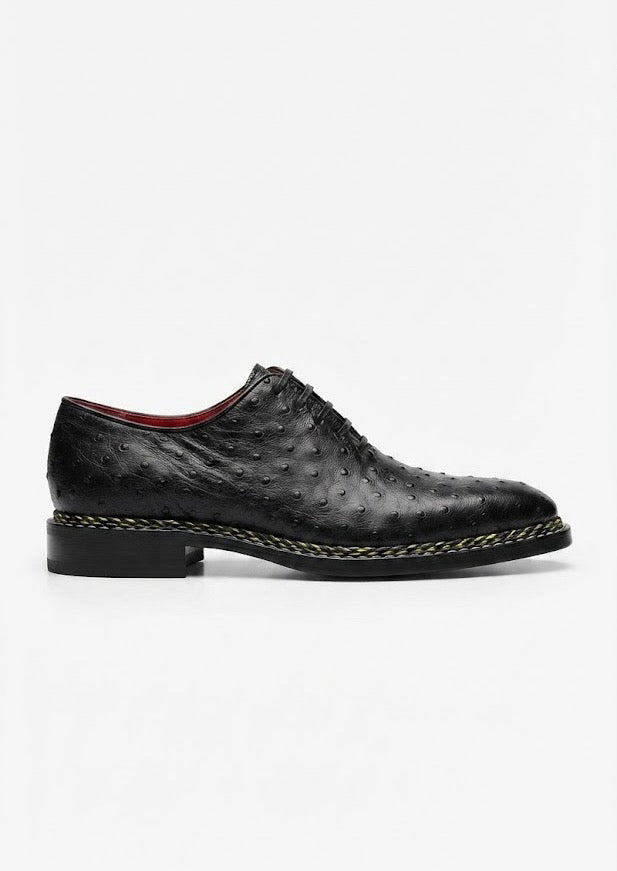
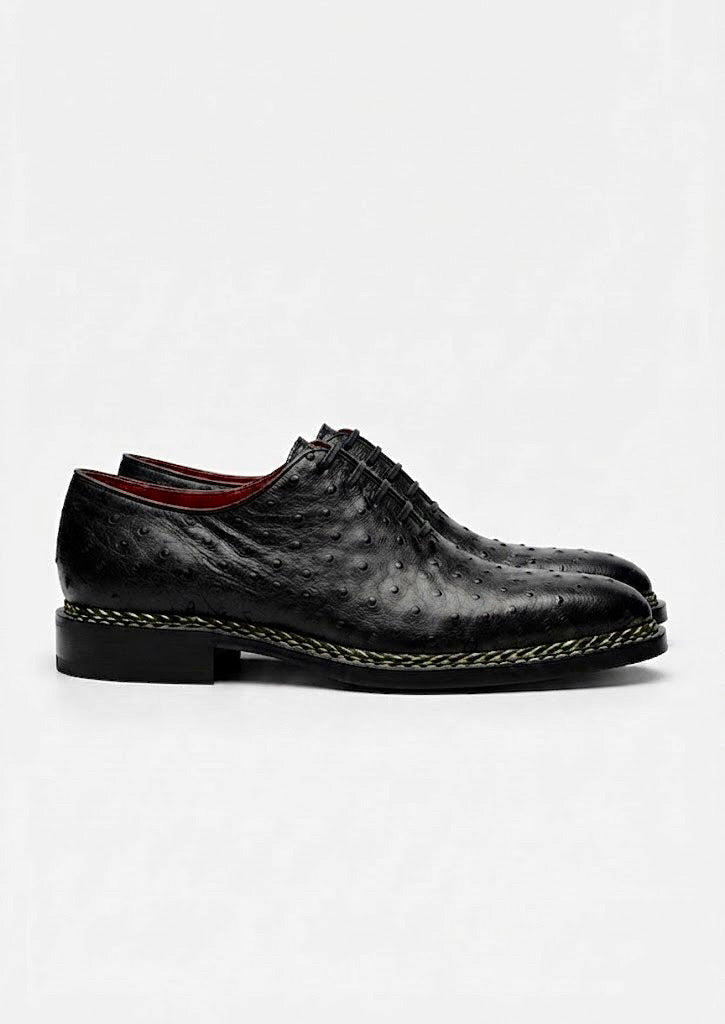
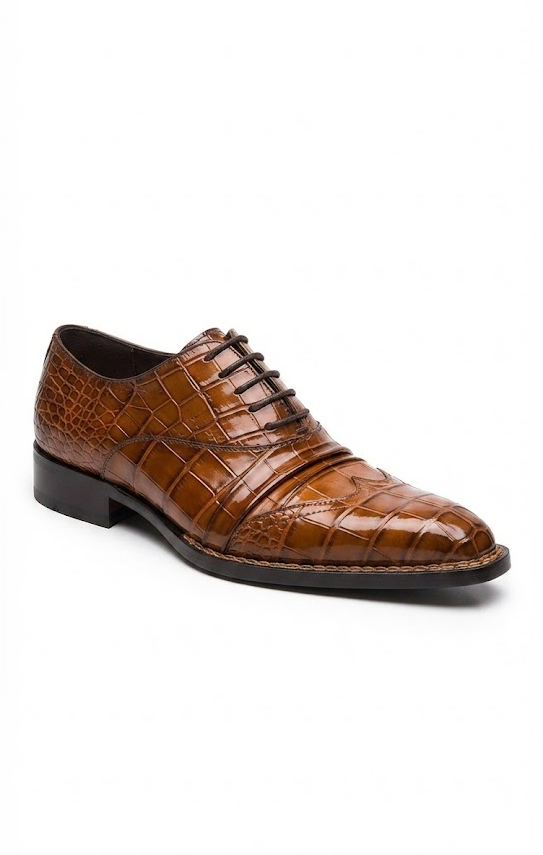
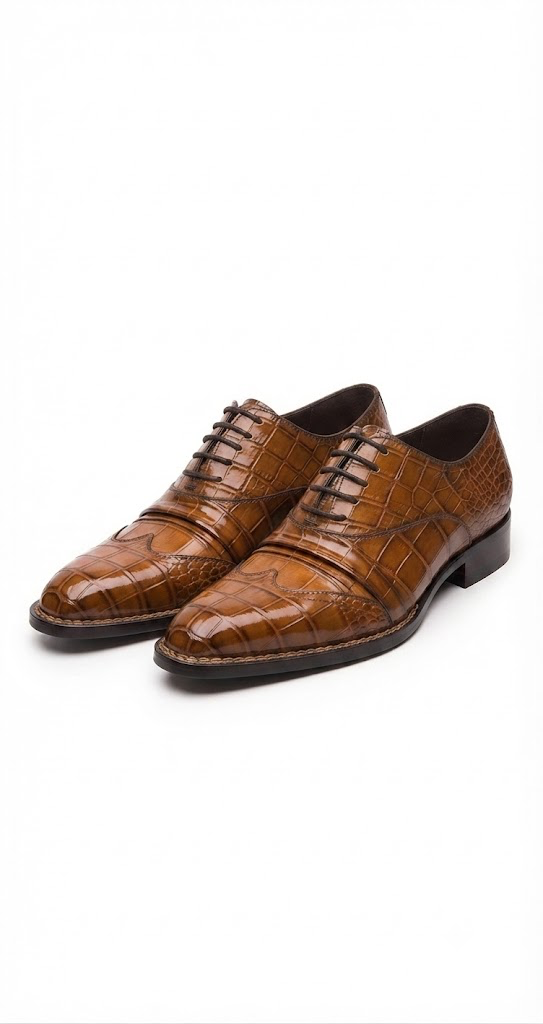
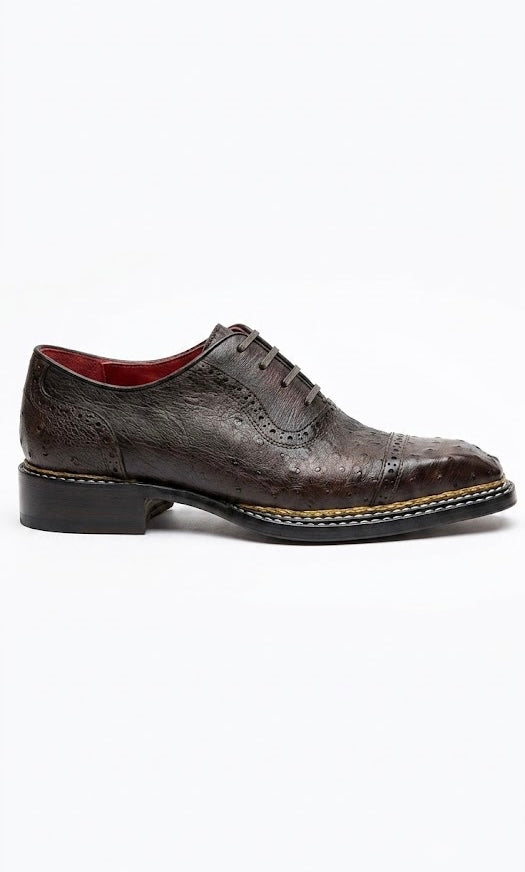
Crocodile, alligator and ostrich, clicked by hand so the scale runs true down the centre of the toe.
Made to order
Four weeks on the bench
Free worldwide shipping
Insured, tracked, duties prepaid
Hand welted
Stitched, never cemented
One free resize
First exchange is on the house
Five ways to cut a skin
The last dictates the fit, the cut dictates the occasion. Run the cursor across a line to see the house version of it.
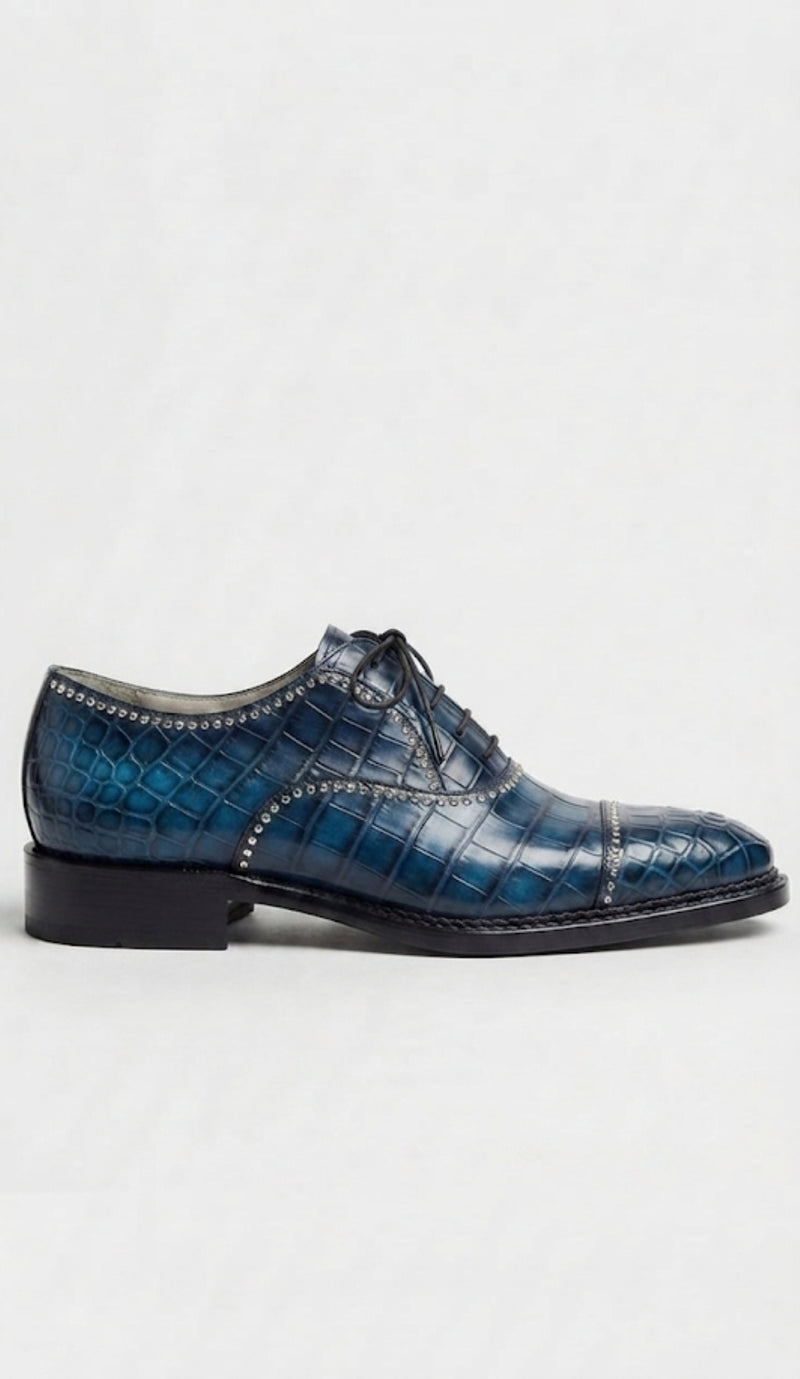
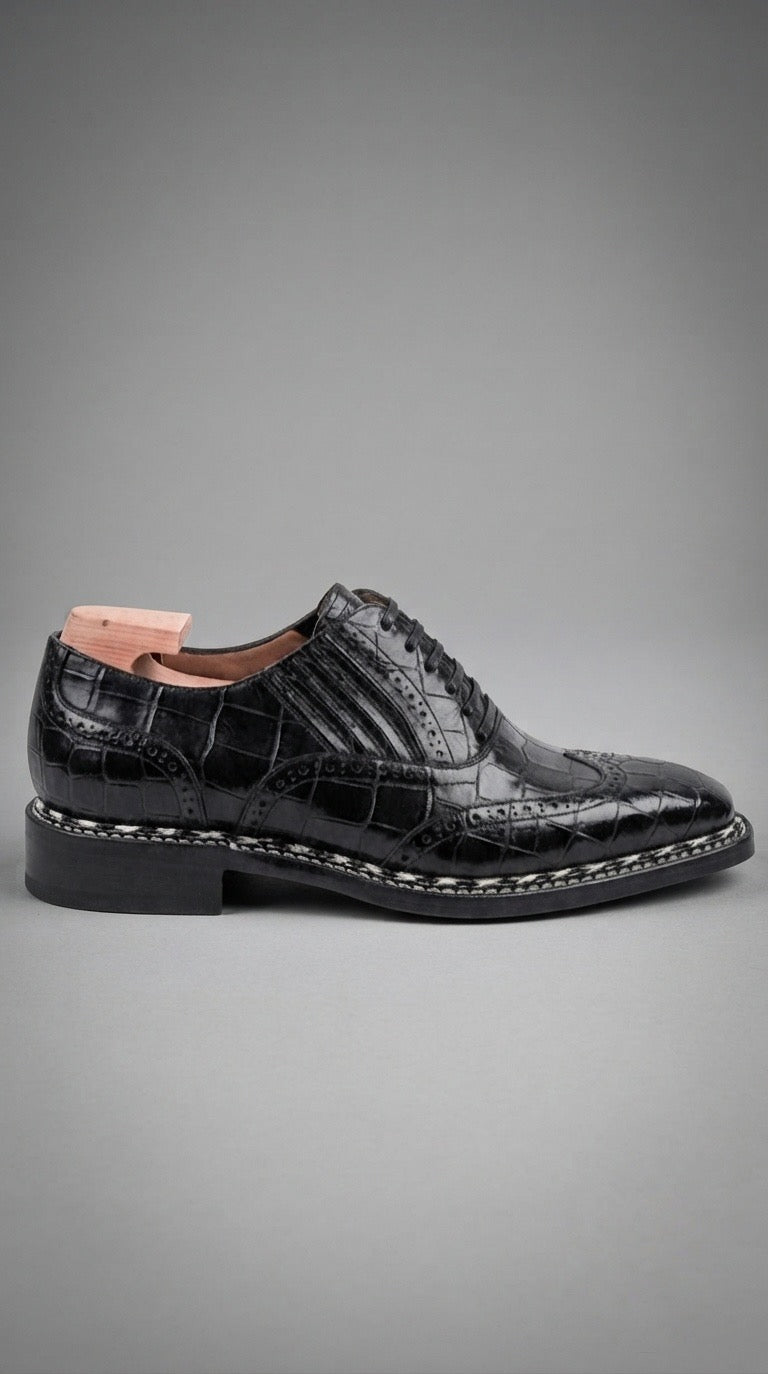
On the bench now
View all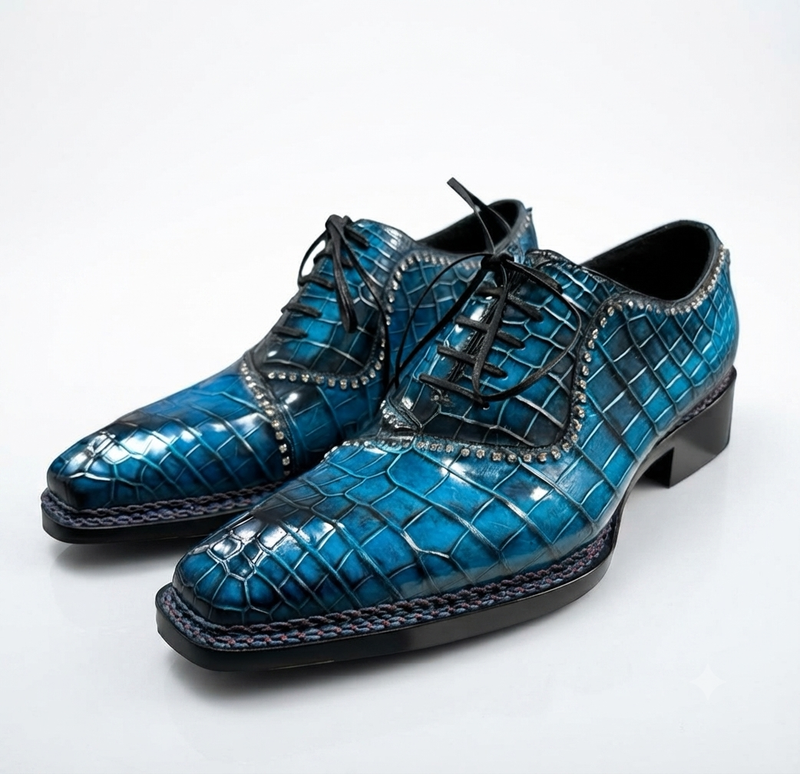
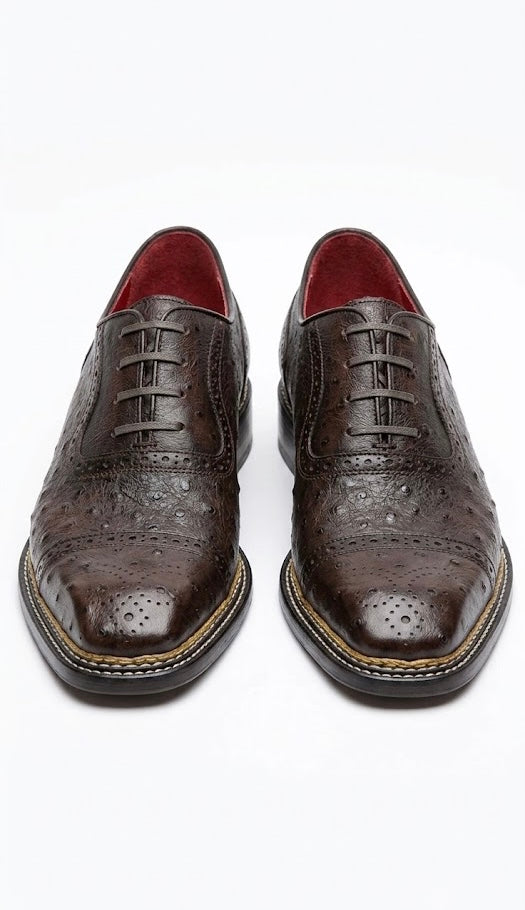
How we craft our shoes
The skins
Three hides, three tempers
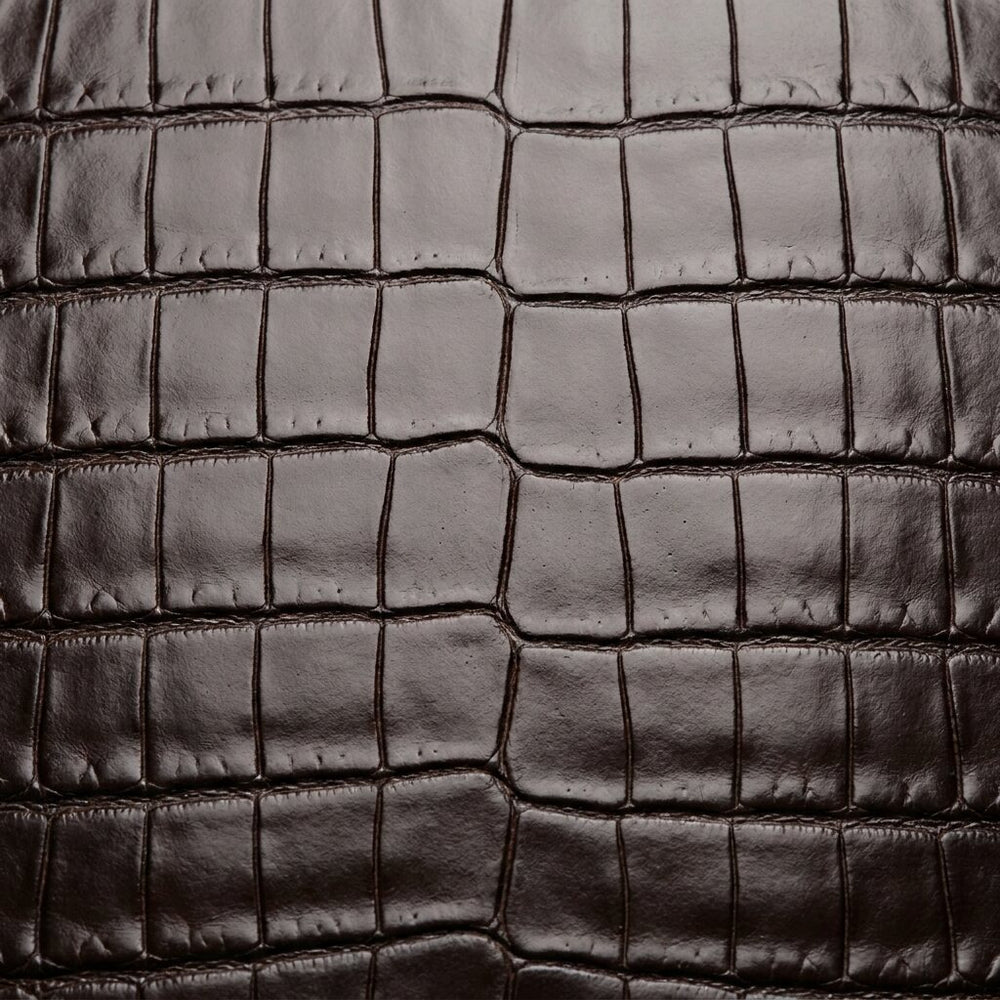
Crocodile and alligator
Belly cut, always. The scales run in even rows and grow gently toward the flank, which is why the pattern on a well clicked pair looks like it was drawn rather than found. Alligator carries a softer, rounder tile and takes a deeper gloss. Crocodile holds a sharper edge and a harder shine.
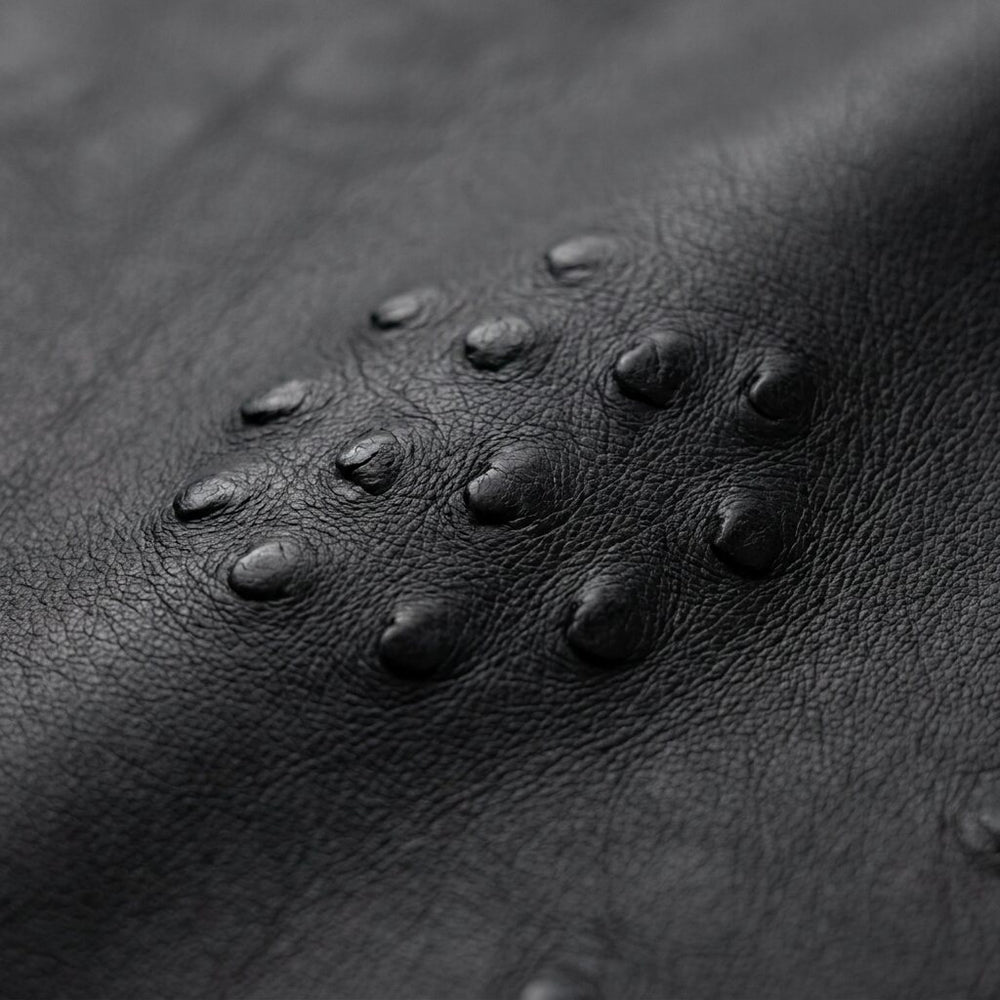
Ostrich
The crown of the hide carries the quill follicles, and only about a third of any skin has them spaced tightly enough to use. Ostrich is the most forgiving of the three: it takes a knock, softens fast, and never cracks across the vamp the way a stiff calf will.
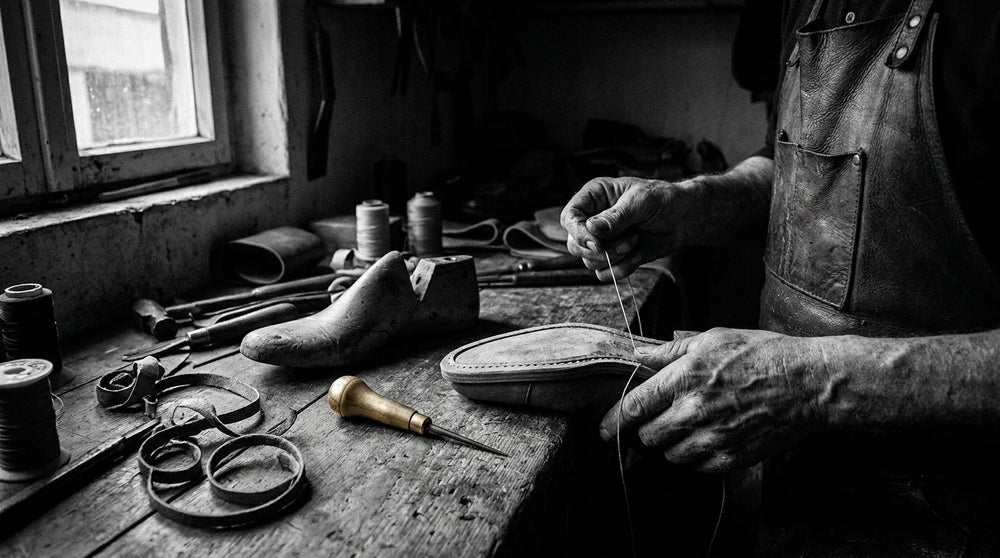
Half of it is just waiting
Skin selection
Bellies are graded by scale symmetry. Anything with a scar through the vamp field is set aside for small goods.
Clicking
The pattern is cut by hand so the centre line of the belly runs dead centre down the toe. This is why no two pairs match.
Lasting
The upper is pulled wet over a wooden last and left to take its shape before the sole goes near it.
Welting and finishing
Hand stitched welt, oak bark sole, then the patina is built in thin coats until the depth is right.